Small Room, Big Personality: Paint and Wallpaper Tricks to Open Up Tight Spaces in Ulster Homes
There's a particular kind of frustration that comes with loving your home but feeling a bit squashed in it. If you live in a Victorian terrace in east Belfast, a 1930s semi in Lisburn, or a compact new-build on the outskirts of Derry, you'll know exactly what we mean. Good bones, loads of character — but rooms that can feel a touch claustrophobic when you're trying to make them work for modern life.
Here's the thing though: you don't need to knock down walls or call in the builders. Paint and wallpaper, used with a bit of intention, can genuinely transform how a space feels. Not in a "if you squint" kind of way — in a real, noticeable, guests-commenting-on-it kind of way. Let's get into it.
Why Small Rooms Feel Small (It's Not Just About Square Footage)
Before you reach for a paint brush, it helps to understand what's actually making a room feel tight. Usually it's one of a few things: dark colours absorbing light, busy patterns drawing the eye inward, or a lack of visual flow between surfaces. Sometimes it's a ceiling that feels too low, or walls that seem to close in because every surface is a different shade.
The goal of any small-room decorating strategy is to trick the eye — to create a sense of depth, height, or width that isn't physically there. Paint and wallpaper are genuinely brilliant at this, and you don't need to be an interior designer to pull it off.
Colour: Your Most Powerful Tool
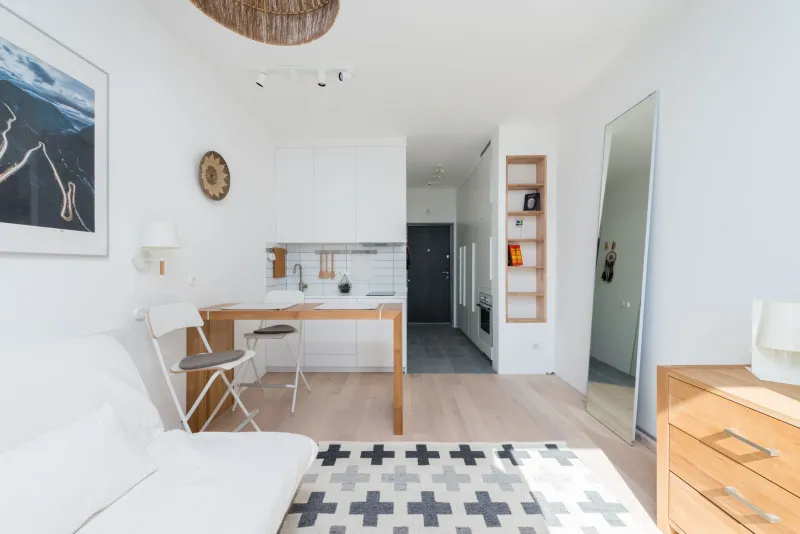
Light, cool tones are the obvious starting point — soft whites, pale greys, airy blues and sage greens all reflect natural light and push walls back visually. But "go light" doesn't have to mean "go boring." A warm off-white like a creamy linen shade will feel much cosier than a stark brilliant white, which can actually feel clinical in smaller spaces rather than expansive.
One trick that's particularly effective in compact Ulster rooms — where you're often dealing with limited window light thanks to our, let's be honest, fairly dependable cloud cover — is to use a single colour across walls, woodwork, and even the ceiling. It sounds counterintuitive, but eliminating those hard contrasts between skirting, door frames, and walls removes visual clutter and makes the room feel like one continuous, generous space.
If you want a bit more drama without sacrificing the sense of space, try a mid-tone on three walls and a slightly lighter version of the same shade on the fourth. It creates depth without breaking the room into competing sections.
Finish Matters More Than You Think
The sheen of your paint is something a lot of people overlook, but in small rooms it can make a significant difference. Light-reflective finishes — satins and eggshells rather than dead flat mattes — bounce light around the room, which does a lot of the heavy lifting in darker spaces. This is especially worth considering in north-facing rooms or ground-floor rooms that don't get much direct sunlight.
That said, if your walls aren't in great nick (and in older Northern Irish properties, they often aren't), a higher sheen will highlight every bump and crack. In that case, a quality matt emulsion in a lighter shade will still open the space up without drawing attention to the imperfections.
Wallpaper: It's All About Scale and Direction
Wallpaper and small rooms have a complicated reputation. The fear is that pattern will overwhelm a tight space — and with the wrong choice, it can. But wallpaper can also be one of the most effective tools you have, as long as you're thoughtful about scale and direction.
Vertical patterns are your friend in rooms with low ceilings. Thin stripes, tall botanical prints, or any design with a strong upward movement will draw the eye towards the ceiling and make the room feel taller. This works particularly well in narrow hallways — a common feature in older Ulster homes — where a vertically patterned wallpaper on one or both walls can transform a corridor from a squeeze into something that feels almost elegant.
Horizontal patterns, on the other hand, are brilliant for making a room feel wider. A subtle horizontal stripe — even just a texture rather than a bold stripe — on a short end wall can make a boxy room feel more balanced and spacious. Just keep the scale modest; a wide, bold stripe in a small room can veer into novelty territory quickly.
Small-scale prints generally work better than large repeats in tight spaces. A delicate geometric, a small floral, or a fine textural design gives visual interest without overwhelming the room. Large-scale patterns tend to get cut off by corners and door frames in compact rooms, which looks messy and actually makes the space feel more cluttered.
The Feature Wall Question
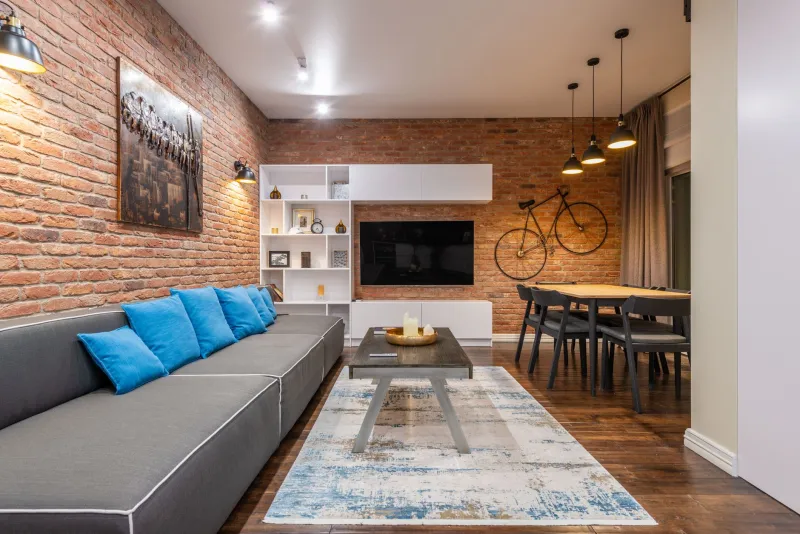
Feature walls in small rooms are a bit of a debate. The traditional advice is to avoid them — the thinking being that a contrast will chop the room up and make it feel smaller. But a well-chosen feature wall can actually add depth, particularly if it's the wall furthest from the door. Painting or papering the wall you see first when you enter draws the eye across the room, creating a sense of distance.
If you're going for a feature wall in a small bedroom or living room, keep the other three walls light and relatively neutral so the feature doesn't compete with itself.
Specific Rooms, Specific Tricks
Narrow hallways: Go light on the walls and use a vertically patterned wallpaper if you want some interest. A slightly darker shade on the floor — whether that's paint on floorboards or a darker runner — grounds the space and makes the walls feel further apart by contrast.
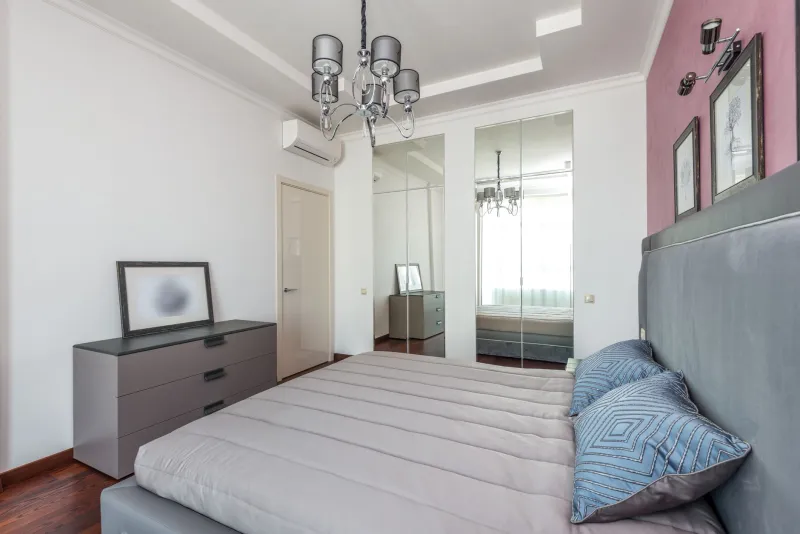
Box bedrooms: The single-colour approach (walls, ceiling, woodwork all in the same tone) is particularly effective here. A soft, warm neutral makes the room feel like a cocooning retreat rather than a cell. Add texture through wallpaper on the headboard wall rather than bold colour contrast.
Compact living rooms: Avoid breaking the room up with too many different finishes. A light wall colour, a slightly lighter ceiling shade, and neutral woodwork keeps things cohesive. If you want pattern, a textural wallpaper on the chimney breast adds interest without fragmenting the space.
A Word on Ulster's Light
It's worth being real about this: natural light in Northern Ireland is a precious commodity for much of the year. Whatever tricks you use with colour and pattern, they'll work best when paired with maximising the light you do have. Keep window treatments light and simple, use mirrors strategically, and don't underestimate how much a light-reflective paint finish can compensate for limited daylight.
The good news is that our damp, overcast climate actually makes us pretty good at designing for low-light conditions — and the right paint or wallpaper choice can make even a grey November afternoon feel a bit more manageable inside.
Small rooms don't have to feel like a compromise. With a bit of planning and the right products, they can be some of the most characterful spaces in your home. If you're not sure where to start, pop into us or get in touch — we're always happy to talk through colour choices and wallpaper options for your specific space.