One Bold Move: Accent Walls, Statement Ceilings, or a Standout Door — What's Right for Your Home?
The Case for Going Big in Just One Spot
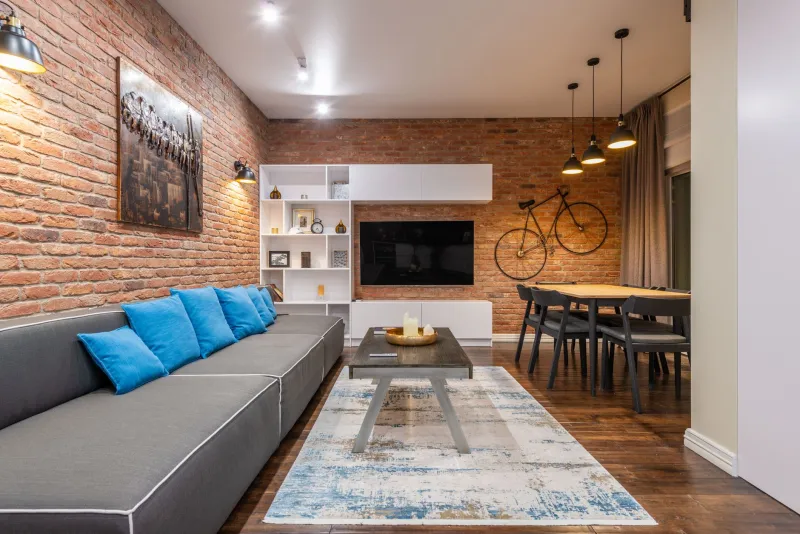
There's a temptation, when you're redecorating, to go all in. New colour on every wall, fresh wallpaper throughout, the lot. But experienced decorators — and plenty of Ulster homeowners who've learned the hard way — will tell you that restraint can be just as powerful as enthusiasm. Picking one focal point and committing to it properly often delivers more impact than spreading a bold idea too thin.
The question is: which focal point? Accent walls, feature ceilings, and statement doors are the three most popular options right now, and each one suits a different kind of room, a different kind of home, and a different kind of homeowner. Let's break them down.
Accent Walls: The Classic Choice (Done Right)
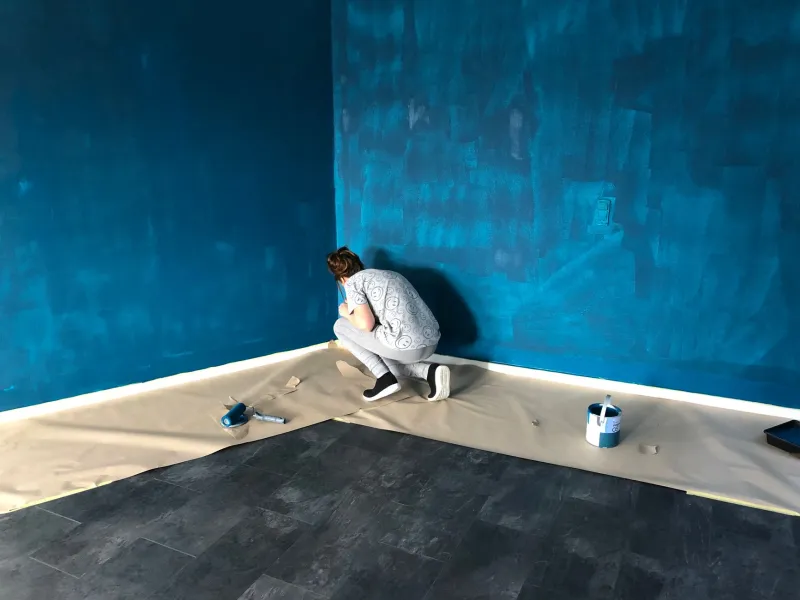
The accent wall has been around long enough to attract its fair share of cynics. Badly done, it can look like someone ran out of paint halfway through. Done well, though, it anchors a room beautifully and gives you a genuine focal point without committing your whole space to a single colour.
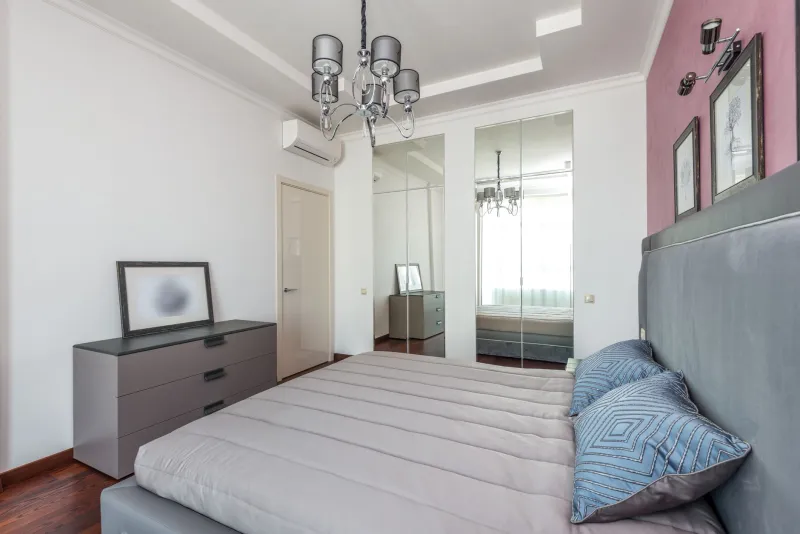
In Northern Irish homes — many of which are semi-detached or terraced with modestly proportioned rooms — accent walls work particularly well when they're behind a bed, a sofa, or a fireplace. You're essentially framing the thing that already draws the eye, which makes the whole room feel more intentional.
What actually works here:
- In rooms with limited natural light (and let's be honest, Ulster doesn't exactly overflow with sunshine), choose a warm-toned deep colour like a burnt terracotta, a rich forest green, or a deep navy. These shades absorb light in a way that reads as cosy rather than gloomy.
- If your room is small, avoid going darker on the wall directly opposite the window. Instead, paint a side wall — this creates depth without making the room feel like it's closing in.
- Wallpaper on an accent wall is still very much a thing, and rightly so. A botanical print or a textured grasscloth effect on a chimney breast can do more for a living room than a full repaint ever would.
Before and after tip: Imagine a standard Northern Irish terrace sitting room with magnolia on every wall and a brown sofa. Paint the chimney breast wall in a deep sage green, swap the light fitting for something with warm-toned bulbs, and suddenly that sofa looks intentional. The room hasn't changed size, but it feels curated.
Feature Ceilings: The Move Nobody Expects
If accent walls are the reliable choice, feature ceilings are the one that gets people talking. For a long time, ceilings were the forgotten fifth wall — painted white and left to get on with it. That's changing fast, and it's one of the most exciting trends to make its way into everyday homes across the UK.
The beauty of a painted or papered ceiling is that it works in rooms where an accent wall might not. Narrow hallways, for instance — a common feature in older Northern Irish properties — often don't have a wall that's wide enough to carry a bold colour without looking awkward. But paint that ceiling in a deep teal or a dusty rose, and suddenly the hallway has drama without feeling cramped.
Where feature ceilings really shine:
- Rooms with high ceilings (Victorian or Edwardian properties in Belfast or Derry often have these) are ideal candidates. A dark ceiling in a tall room feels luxurious rather than oppressive.
- Bathrooms are an underrated spot for a feature ceiling. Given that moisture-resistant paint is a must anyway, you might as well make it interesting. A deep inky blue overhead turns a functional bathroom into something a bit more spa-like.
- Wallpaper on a ceiling sounds extreme but is genuinely achievable. A small-scale pattern — stars, delicate botanicals, a subtle geometric — adds texture and interest without requiring you to live with it at eye level.
A word of caution: If your ceilings are already on the lower side (and plenty of post-war bungalows and 1970s builds across Ulster have ceilings that aren't exactly lofty), go for a mid-tone rather than a very dark shade. The goal is interest, not the feeling that the roof is about to land on your head.
Before and after tip: A small box room used as a home office, painted entirely in off-white, feels flat and forgettable. Paint the ceiling in a warm terracotta and keep the walls light. The result is a room that feels energised without being distracting — exactly what a workspace needs.
Statement Doors: The Bold Move That Earns Its Keep Outside and In
Front doors get all the attention in interior design content, and fair enough — a freshly painted front door is one of the highest-impact, lowest-effort upgrades you can make to your home. But internal doors deserve a moment too, and they're often the most overlooked opportunity in the whole house.
In Northern Irish neighbourhoods where houses are architecturally similar — think the rows of pebbledash semis that make up so much of suburban Belfast, Lisburn, or Antrim — a front door in a distinctive colour is genuinely one of the few ways to express personality from the outside. Deep navy, forest green, burgundy, and warm black are all strong performers and tend to hold their kerb appeal across changing trends.
For front doors:
- Use an exterior gloss or satin finish designed for outdoor use. Ulster's weather is not gentle, and a paint that isn't formulated for UV exposure and rain will look shabby within a season.
- Prep matters enormously here. Sand back, prime properly, and apply at least two coats. A well-painted front door can last five years or more; a rushed job will be peeling by next autumn.
- Consider the brickwork or render colour of your house before you choose. A terracotta door on a red-brick house can clash badly. Cooler tones — slate blue, sage, black — tend to be more forgiving across different exterior finishes.
For internal doors:
- Painting internal doors a contrasting colour to the walls is a genuinely striking move. Picture a hallway with pale walls and a row of doors painted in a deep charcoal or forest green — it creates a rhythm that feels considered and architectural.
- Gloss finish on internal doors is traditional and practical (easier to wipe down), but a satin finish looks a little more contemporary if that's the direction you're heading.
Before and after tip: A landing with cream walls and matching cream woodwork looks flat and a little dated. Paint the doors in a soft black, keep the walls light, and add a runner on the floor. The bones of the house suddenly look intentional rather than default.
So Which One Should You Choose?
Here's a simple way to think about it:
- Go for an accent wall if you have a clear focal point in a room — a fireplace, a bed head, a statement sofa — and you want to frame it without repainting everything.
- Go for a feature ceiling if your walls are awkward shapes, your room is narrow, or you want drama without giving up wall space for art or furniture.
- Go for a statement door if you want impact with minimal disruption — it's the quickest of the three options and the one that requires the least commitment.
And of course, none of these are mutually exclusive. An accent wall and a painted ceiling in the same room can work beautifully, as long as they're in the same colour family. The key is always to make it look deliberate — like you meant it, not like you ran out of ideas halfway through.
If you're not sure where to start, come and have a chat with us. That's what we're here for.