You're Putting Your Feature Wall in the Wrong Place — Here's Why
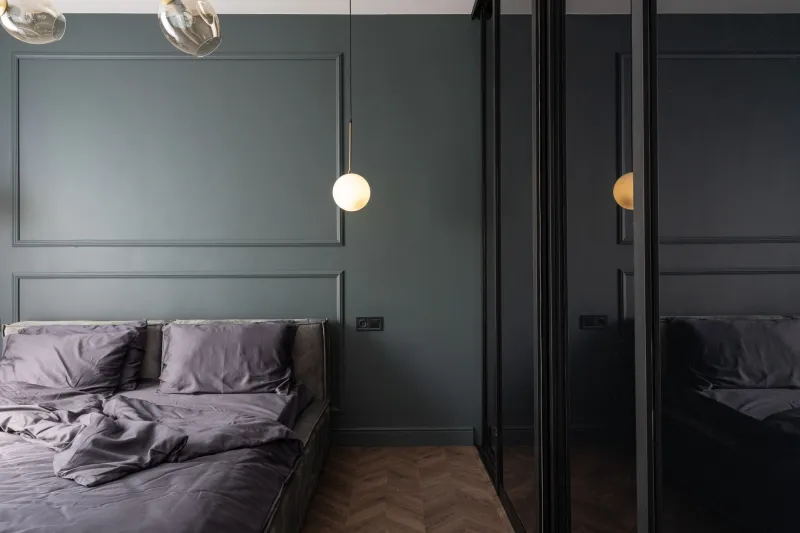
Ask most people how they chose their bedroom feature wall and they'll give you the same answer: "It's the one I see when I'm lying in bed." Makes sense on the surface, doesn't it? You're in the bedroom to sleep, so why not make the view from the mattress count?
Except here's the thing. You're not actually staring at that wall as much as you think. And in a lot of Ulster homes — where rooms tend to be modestly sized and windows face into grey Atlantic skies for a good chunk of the year — that instinct is quietly sabotaging the whole look.
Let's untangle this properly.
The Pillow Perspective Problem
The wall directly opposite the foot of your bed is the classic feature wall choice. It's what interior design content on social media pushes constantly, and it does make a certain kind of visual sense — it frames the bed like a stage set, giving the room a tidy, intentional feel in photos.
But think about your actual morning. You wake up, swing your legs out, stand up, and immediately face... the opposite direction. You're at the wardrobe, the en suite door, the window. You're moving around the room for twenty minutes getting dressed. The wall behind the bed's headboard? You haven't looked at it once.
That headboard wall — the one your pillows rest against — is the wall you genuinely interact with most when you're conscious and upright. It's in your eyeline when you're getting changed, when you're sitting at a dressing table, when you pause in the doorway before heading downstairs. If any wall in the bedroom deserves the drama of a deep teal or a patterned wallpaper, it's a strong argument for that one.
How Ulster Light Changes the Equation
Northern Ireland's weather isn't exactly known for flooding rooms with brilliant sunshine. Cloud cover is our default setting for much of the year, and that diffused, low-contrast light has a real effect on how colour reads on your walls.
In brighter climates, a dark feature wall on the north-facing side of a room can still feel grounded and intentional because there's enough ambient light bouncing around. In a typical Ulster bedroom in November, that same wall can feel like it's pulling the room inward in a way that stops being cosy and starts feeling a bit suffocating.
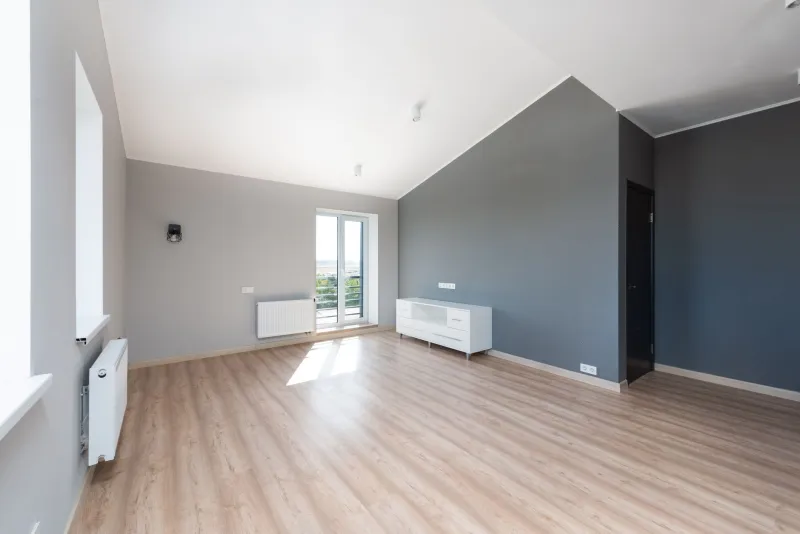
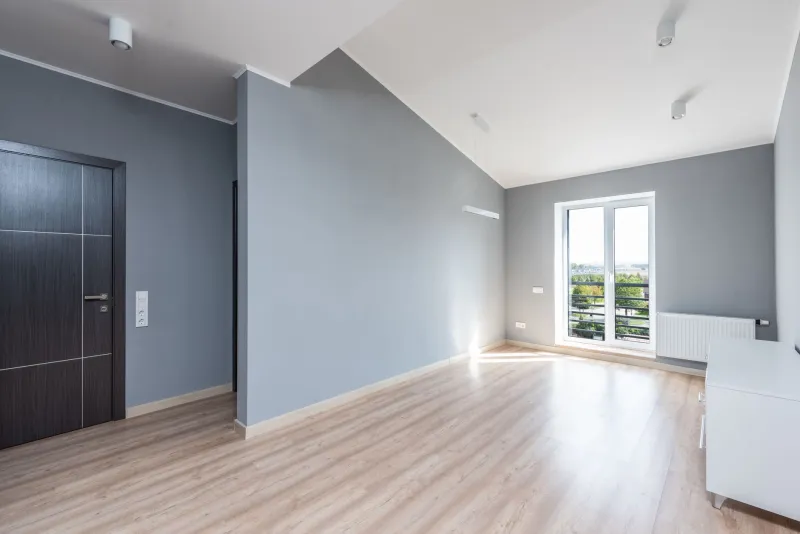
This matters for placement because the relationship between your feature wall and your window is everything. A bold colour or busy pattern on a wall that sits perpendicular to your main window will catch light at an angle throughout the day, giving it texture and life even in flat conditions. A feature wall directly opposite a window will get hit with whatever glare comes through — which can wash out lighter shades and create uncomfortable contrast with darker ones.
In most Ulster bedrooms, the wall adjacent to the window — rather than facing it or hiding behind the bed — is often the sweet spot. It benefits from side-light, it's visible from multiple positions in the room, and it doesn't compete with the natural focal point the window itself creates.
The Psychology of Visual Rest
There's a reason interior designers talk about "visual rest" — the idea that your eye needs somewhere to settle without being constantly challenged. A bedroom should be the easiest room in the house to be in. That's its whole job.
When a feature wall is placed in a spot that draws your eye every time you move, rather than providing a calm backdrop to the rest of the room, it creates low-level visual noise. You don't necessarily notice it consciously, but the room never quite feels as relaxing as it should.
The best feature walls in bedrooms are the ones that reward you when you look at them deliberately — not the ones that demand your attention whenever you glance up. That's a subtle but important distinction. A rich, dark wallpaper on the headboard wall sits behind you when you're sitting up in bed, and faces you when you walk in through the door. It frames the room's focal point (the bed) without competing with it.
Practical Questions to Ask Before You Pick Up a Brush
Before you commit to a wall, spend a few minutes actually watching how you use your bedroom. Here are some things worth noticing:
Where do you stand most? If you've got a built-in wardrobe on one wall, you're probably facing that wall for a decent chunk of your morning. That makes the opposite wall — the one you're unconsciously looking at while deciding what to wear — a prime candidate for something interesting.
Where does your eye go when you walk in? The wall your gaze lands on first as you enter the room is doing the heavy lifting for first impressions. That's where a feature treatment will have the most impact for guests, and for your own daily mood as you come home.
What direction does your window face? South-facing windows in Ulster (yes, we do get some sun) will throw warm afternoon light. North-facing rooms stay cooler and more consistent. Knowing this helps you choose not just placement but colour temperature — warmer tones on north-facing walls, cooler or more saturated shades where there's more natural light to play with.
How big is the room? In smaller bedrooms — which is a fair description of a lot of older terraced and semi-detached homes across Belfast, Derry, and beyond — a feature wall on the shorter end of the room can make the space feel wider. A feature wall on the longer side can have the opposite effect, depending on how it's handled.
When the Classic Choice Is Still Right
None of this means the foot-of-bed feature wall is always wrong. In larger rooms with good proportions and decent light, it can work beautifully — especially if you're using wallpaper with a vertical repeat that draws the eye upward and makes ceilings feel higher.
The point isn't to throw out the conventional wisdom entirely. It's to question whether you're making the choice based on how the room actually functions, or based on how it photographs. Those are two very different things, and in a home you actually live in, the former matters a lot more.
Making the Call
If you're genuinely unsure, try this: stand in the doorway of your bedroom and hold a large piece of coloured card or a paint swatch against each wall in turn. Notice which placement changes the feeling of the room most dramatically — not which one looks most like a magazine layout.
Ulster homes have their own character, their own light, and their own rhythms. The best decorating decisions come from working with that reality rather than copying an aesthetic that was designed for a sun-drenched Scandinavian apartment or a converted London warehouse.
Your bedroom deserves a feature wall that actually works for you. Sometimes that means rethinking where you put it.